Quito Ecuador Temple Wiki
Quick Facts
ANNOUNCED
3 April 2016
ANNOUNCED BY
President Thomas S. Monson
GROUNDBREAKING
11 May 2019
GROUNDBREAKING PRESIDED BY
Elder Enrique R. Falabella
DEDICATED
20 November 2022
DEDICATED BY
Elder Quentin L. Cook
DEDICATION ORDER
175
LOCATION
Ruta Viva y Escalón Lumbisí, Esq.
170157 Cumbayá, Quito
Ecuador
PHONE
(+593) 2380 2960
Description
History
Prior to the announcement of the Quito Ecuador Temple, Ecuador was the country with the highest number of members with only one temple. Members in Quito would travel 270 miles to reach the Guayaquil Ecuador Temple. Saints in the Imbabura region, north of Quito, generally arranged 13-hour overnight bus trips to attend the temple, participating in two endowments sessions and a lunch before reboarding the bus and returning home.
At the time of its announcement, there were seven operating stakes in the city, which is the second most populous city in Ecuador with a population of 2.5 million people. The most populous city is Guayaquil where the nation’s first temple was constructed.
Announcement
On 3 April 2016, during the Sunday morning session of the 186th Annual General Conference, President Thomas S. Monson announced that Ecuador’s second temple would be constructed in the capital city of Quito.[1]”Four New Temples Announced by President Monson,” The Church of Jesus Christ of Latter-day Saints News Release, 3 Apr. 2016.
Ecuador Temples at the Time of Announcement
Announced
- –
Under Construction
- –
Dedicated
- Guayaquil Ecuador [1999]
ANNOUNCED ORDER
174
| Date | 2016 04 03 |
| By | Thomas S. Monson |
| Role | President |
| Via | General Conference |
⮜Preceded by Bangkok Thailand
Followed by Harare Zimbabwe⮞
Announced 2016 04 03
Location Announcement [Site Selection]
text.[2]citation
Render Released
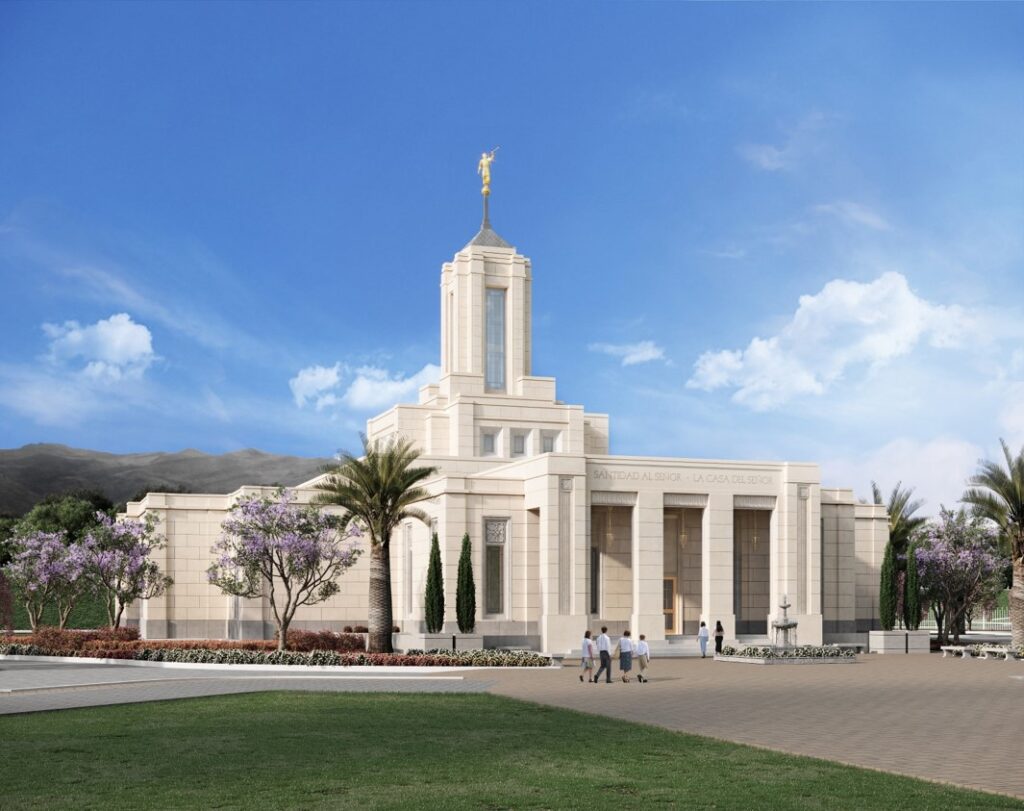
The official rendering of the Quito Ecuador Temple was released on March 7, 2019, in conjunction with the groundbreaking announcement.
Groundbreaking Announced
text
Groundbreaking
Elder Enrique R. Falabella, president of the South America Northwest Area, presided at the groundbreaking ceremony for the Quito Ecuador Temple on Saturday, May 11, 2019. Special guests in attendance included the Interior Minister, Dr. Maria Paula Romo, and several religious leaders. Elder Hugo Montoya, a counselor in the area presidency, spoke to the congregation of more than 800 people. “As members we support each other to serve the citizens of this country. The temple will be a refuge. We should not be distressed despite our problems,” he said. “If we can be in a safe place, this place is the temple.”
GROUNDBREAKING ORDER
178
| Date | 2019 05 11 |
| By | Enrique R. Falabella |
| Role | Seventhy |
| Attendees | ## |
⮜Preceded by Yigo Guam
Followed by Lima Peru Los Olivos⮞
Dedication announced
text
Open House
The public was invited to tour the Quito Ecuador Temple from Friday 14 October through Saturday 29 October 2022, with no tours held on Sundays.
| Start Date | 2022 10 14 |
| End Date | 2022 10 29 |
| Days | 11 |
| Attendees | 50,000 |
| Per day | 3,636.4 |
Dedication
The Quito Ecuador Temple was dedicated by Elder Quentin L. Cook of the Quorum of the Twelve Apostles on Nov. 20, 2022. The Quito temple was the second temple built in Ecuador and the 24th temple in South America. Prior to the Quito temple’s dedication, members in Quito would travel 270 miles to the Guayaquil Ecuador Temple.
Elder Cook presided over three dedicatory sessions. He was accompanied by his wife, Sister Mary Cook; Elder Kevin R. Duncan, a General Authority Seventy and executive director of the Church’s Temple Department, and his wife, Sister Nancy Duncan; Elder Shayne M. Bowen, General Authority Seventy, and his wife, Sister Lynette Bowen; Elder Jorge F. Zeballos, a General Authority Seventy and president of the Church’s South America Northwest Area, and his wife, Sister Carmen Zeballos.
Elder Cook described the purpose of temples as one that is eternally essential for all of Heavenly Father’s children.
“Temples provide the understanding, clarification, resolution and ordinances that are essential under the Father’s glorious plan to bless those who are on the covenant path.”
Elder Cook said the ordinances themselves are blessings and that continuing to be blessed through those ordinances requires work.
“The primary blessings of the temple are the ordinances of exaltation. The gospel is about exaltation, which requires the making and keeping of sacred covenants with God,” he said.
This dedication came 10 days before the 60th anniversary of Elder Cook and Sister Mary Cook’s sealing in the Logan Utah Temple. After completing the Quito temple dedication, Elder Cook said, “Everything just seemed so right.”
DEDICATION ORDER
175
| Date | 2022 11 20 |
| By | Quentin L. Cook |
| Role | Apostle |
| Sessions | 3 |
| Attendees | # |
⮜Preceded by Belém Brazil
Followed by San Juan Puerto Rico⮞
Dedicatory Prayer
Construction Duration
| Span | Duration |
|---|---|
| Announced to Groundbreaking | 3 y, 1 m, 8 d |
| Groundbreaking to Dedication | 3 y, 6 m, 9 d |
| Announced to Dedication | 6 y, 7 m, 17 d |
Dedicatory Order
GLOBAL
175
REGION
S. AM.
23
COUNTRY
ECUADOR
2
STATE
PICHINCHA
1
COUNTY
–
–
CITY
QUITO
1
Summary
The Quito Ecuador Temple was the second temple built in Ecuador, following the Guayaquil Ecuador Temple (1999). The Quito Ecuador Temple was dedicated on the same day as the Belém Brazil Temple. The two temples were also announced on the same day.
Detail
Groundbreaking Announced
- text
- text
Announced
- text
- text
Dedication Announced
- text
- text
Under Construction
- text
- text
Rededication Announced
- text
- text
Under Renovation
- text
- text
Renovation Scheduled
- text
- text
Presidents and Matrons
| Temple President | Temple Matron | Years Served |
|---|---|---|
| text | text | yyyy– |
| text | text | yyyy–yyyyy |
Details
Location
Nestled in a long, narrow valley high in the Andes mountains, Quito is known for being one of the highest capital cities in the world at 9,350 feet above sea level. The Quito Ecuador Temple is located in the eastern suburb of Cumbayá at the junction of Ruta Viva and Escalón Lumbisí in the Tumbaco valley.
Site
An L-shaped housing facility shares the temple site, located directly across from the temple entrance. Royal palm trees accentuate the beautifully landscaped temple grounds that may be enjoyed by the public.
Exterior
The simplicity, symmetry and subtle details of the exterior of the temple create a striking yet soft contrast with the natural surroundings. The simple tones of the exterior facade emphasize the solidity and presence of the temple. This is achieved by the color of the volcanic andesite stone, located at the base of the temple and in other hard surface areas around the temple. The structure of the temple consists of cast-in-situ concrete walls and floors. The exterior is clad in white Turkish limestone with decoratively carved stone panels above the windows.
The design and manufacture of the exterior artistic stained glass windows were carried out by the Vidrart offices, located in Ecuador. The patterns are abstract florals and the colors that appear are blue, dark green, light green, red, yellow and white, all of which represent the tones of the flowers of Ecuador.
The fountain was designed by the RVC offices, located in Quito. The walls and fountain are covered in natural andesite stone, with an Ecuadorian floral pattern.
Cladding
text
Water Course
Windows
text
Spandrel panel
Exterior Finish
text
Architectural Features
text
| Feet | Meters | |
|---|---|---|
| Height | # | # |
| To Shoulder | # | # |
| Width | # | # |
| Length | # | # |
| Footprint | # | # |
| Heading | Calc |
Symbolism
Inscription
text
text
| Order | |
| Location | |
| Language | |
| Type | |
| Color | |
| Setting | |
| Font | |
| Glyph | |
| Church Name | |
| Temple Name | |
| Dates |
Cornerstone
text
text
| Location | |
| Faces | |
| Material | |
| Set | |
| Edge | |
| Type | |
| Finish | |
| Language |
Spires and Finial
Spires
text
Spire Details
| Spires | # |
| Location | # |
| Finish | # |
| Type | dome, steeple, tower, spire |
| shape | # |
| Tower shape |
Moroni
text
Events
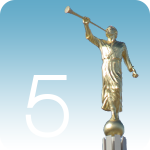
| Sculptor: | Karl Quilter |
| Commissioned: | 1978 |
| Completed: | 1982 |
| Material: | Fiberglass |
| Height: | 7 ft (2.1 m) |
| Weight: | ~300 lbs (181.4 kg) |
| Currently On: | 105 temples |
| Finish: | |
| Placed: | |
| Faces: |
Interior
One of the most notable design elements that is repeated throughout the temple is the floral motif. This motif was inspired by the geranium, a very representative flower of the city of Quito. The geranium is found in outdoor gardens, local parks and home balconies throughout Quito.
The large and small rugs were designed and made by Rugs International. The embroidered design on the rugs reflects the floral patterns found throughout the temple. Its importance comes from the floral richness of Ecuador, which transmits that air of Quito in the rooms.
The temple stands 97 feet tall and is topped by a golden statue of Moroni, a Book of Mormon prophet who is highly significant to Latter-day Saints for his role in the Restoration of the gospel of Jesus Christ.
Entry
text
| Area | – f2 (- m2) |
| Floors above grade | |
| Floors below Grade | |
| Baptistries | |
| Initiatories | |
| Endowment Rooms | |
| Sealing Rooms |
Baptistry
text
| Baptistries: | – |
| Location: | – |
| Exterior Windows: | – |
| Artwork: | – |
| Artwork Type: | – |
| Oxen: | – |
| Type: | – |
| Hoof: | – |
| Color: | – |
| Layout: | – |
| Font Exterior: | – |
| Interior: | – |
| Shape: | – |
| Bowl Shape: | – |
| Pillar: | – |
| Stairs: | – |
| Font Well: | – |
Initiatory Spaces
text
| Style | detached, attached, combined |
| Type | stationary, progressive |
| Rooms | # |
Instruction Rooms
text
| Rooms | # |
| Type | # |
| Capacity | # |
| Murals | y/n |
| Total Muraled Rooms | # |
| Mural Type |
Celestial Room
text-images
Sealing Room
text-images
| Sealing Rooms | |
| Largest Capacity |
Contractors
Architect
[with additional version]
text
Projects by Architect
Project Manager
[without additional version]
text
General Contractor
text
Other Contractor
contractor and position
Region
TEMPLES IN SOUTH AMERICA by country
| Argentina | 7 | Bahía Blanca · Buenos Aires Argentina · Buenos Aires City Center · Córdoba · Mendoza · Rosario · Salta |
| Bolivia | 3 | Cochabamba · La Paz · Santa Cruz |
| Brazil | 24 | Belém · Belo Horizonte · Brasília · Campinas · Campo Grande · Curitiba · Florianópolis · Fortaleza · Goiânia · João Pessoa · Londrina · Maceió · Manaus · Natal · Porto Alegre · Recife · Ribeirão Preto · Rio de Janeiro · Salvador · Santos · São Paulo · São Paulo East · Teresina · Vitória |
| Chile | 6 | Antofagasta · Concepción · Puerto Montt · Santiago · Santiago West · Viña del Mar |
| Colombia | 4 | Barranquilla · Bogotá · Cali · Medellín |
| Ecuador | 2 | Guayaquil · Quito · Otavalo |
| Paraguay | 1 | Asunción |
| Peru | 10 | Arequipa · Chiclayo · Chorrillos · Cusco · Huancayo · Iquitos · Lima · Lima Los Olivos · Piura · Trujillo |
| Uruguay | 2 | Montevideo · Rivera |
| Venezuela | 2 | Caracas · Maricaibo |
Total: 62
Sources and Citations
References
Last updated on: 9 September 2025