1997-2005 (ST Gen 2 & 3)
Generation 2
Description
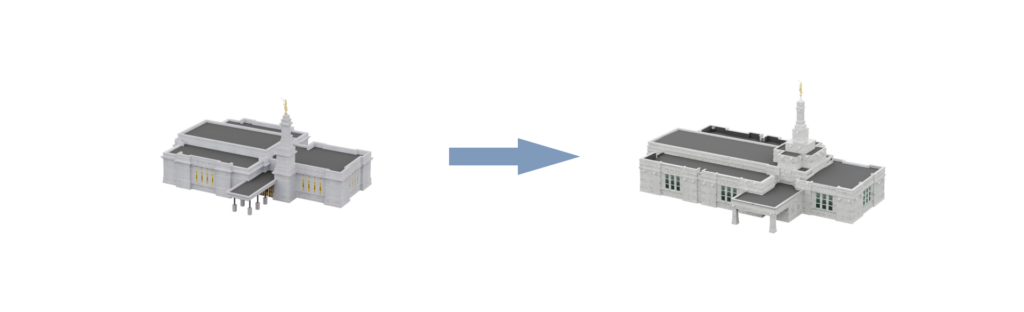
The realization that the original small temple design would be inadequate for most areas lead to an immediate enlargement to further temples.
For this first major change in the floor plan, the only change was on the endowment side of the temple. The baptistry side stayed identical to the plan still in use at Colonia Juarez Mexico. A second, progressive instruction room, and a second sealing room were added, allowing for larger changing spaces as well.
The first of the new, expanded temples, Columbus Ohio, was started on 12 September 1998. Like the Three small temples built before it, it featured a baptistry to the right of the entryway, but a much longer building to the left to make room for the extra space. While Columbus was started with this plan, additional space would be added before construction actually got underway, converting Columbus to a Generation 3 plan (see below) In the end, only one temple, Kona Hawaii, would be built to this plan. This is why the plan was not given its own page on this website. Before Kona was even begun, however, 16 more temples would be started with the slightly larger Generation 3 plan.[1]Kona would be completed and dedicated before roughly half of those.
| Area | 9,000 |
| Floors above grade | 1 |
| Floors below Grade | |
| Baptistries | 1 |
| Initiatories | 2 |
| Endowment Rooms | 2 (progressive) |
| Sealing Rooms | 2 |
List
Dedicated
| Temple | Announced | Groundbreaking | Dedicated | Square Footage |
|---|---|---|---|---|
| Kona Hawaii | 1998 05 07 | 1999 03 13 | 2000 01 23 | 9,000 |
Render

Generation 3
Description
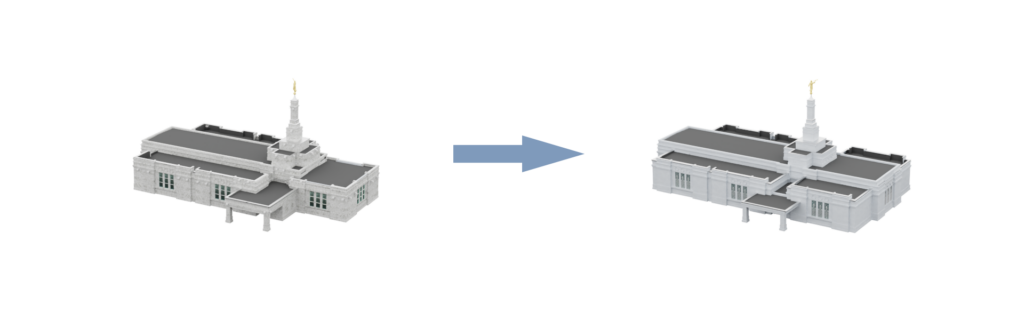
Generation 3 of the Hinckley small temples saw the addition of what PResident Hinckley referred to as the “Mud Room”.[2]Hinckley, Gordon Bitner, 1910-2008. Small temple drawings, 1997-1998 , https://catalog.churchofjesuschrist.org/assets/ba761252-d126-47a1-a355-d19c0ed7a085/0/0 (accessed: February 1, 2025) See catalog description for details It featured a non patron waiting space, bathrooms, and areas where temple workers could change into white temple clothing before starting a shift. Spokane Wyoming was the first temple to be designed from ground up with this floorplan. Columbus Ohio, started with the Generation 2 plan in mind, was upgraded during construction to this new plan.
| Area | 10,700-11,000 |
| Floors above grade | 1 |
| Floors below Grade | |
| Baptistries | 1 |
| Initiatories | 2 |
| Endowment Rooms | 2 |
| Sealing Rooms | 2 |
List
| Temple | Announced | Groundbreaking | Dedicated | Square Footage |
|---|---|---|---|---|
| Spokane Washington | 1998 08 13 | 1998 10 10 | 1999 08 21 | 10,700 |
| Columbus Ohio | 1998 04 25 | 1998 09 12 | 1999 09 04 | 10,700 |
| Bismarck North Dakota | 1998 07 29 | 1998 10 17 | 1999 09 19 | 10,700 |
| Columbia South Carolina | 1998 09 11 | 1998 12 05 | 1999 10 16 | 10,700 |
| Detroit Michigan | 1998 08 10 | 1998 10 10 | 1999 10 23 | 10,700 |
| Halifax Nova Scotia | 1998 05 07 | 1998 10 12 | 1999 11 14 | 10,700 |
| Regina Saskatchewan | 1998 08 03 | 1998 11 14 | 1999 11 14 | 10,700 |
| Edmonton Alberta | 1998 08 11 | 1999 02 27 | 1999 12 11 | 10,700 |
| Raleigh North Carolina | 1998 09 03 | 1999 02 06 | 1999 12 18 | 10,700 |
| St. Paul Minnesota | 1998 07 29 | 1998 09 26 | 2000 01 09 | 10,700 |
| Ciudad Juárez Mexico | 1998 05 07 | 1999 01 09 | 2000 02 26 | 10,700 |
| Hermosillo Sonora Mexico | 1998 07 20 | 1998 12 05 | 2000 02 27 | 10,700 |
| Oaxaca Mexico | 1999 02 23 | 1999 03 13 | 2000 03 11 | 10,700 |
| Tuxtla Gutiérrez Mexico | 1999 02 25 | 1999 03 20 | 2000 03 12 | 10,700 |
| Louisville Kentucky | 1999 03 17 | 1999 05 29 | 2000 03 19 | 11,000 |
| Palmyra New York | 1999 02 21 | 1999 05 25 | 2000 04 06 | 10,700 |
| Fresno California | 1999 01 08 | 1999 03 20 | 2000 04 09 | 11,000 |
| Medford Oregon | 1999 03 15 | 1999 05 20 | 2000 04 16 | 10,700 |
| Memphis Tennessee | 1998 09 17 | 1999 01 16 | 2000 04 23 | 10,700 |
| Reno Nevada | 1999 04 12 | 1999 07 24 | 2000 04 23 | 10,700 |
| Tampico Mexico | 1998 07 08 | 1998 11 28 | 2000 05 20 | 10,700 |
| Nashville Tennessee | 1994 11 09 | 1999 03 13 | 2000 05 21 | 10,700 |
| Villahermosa Mexico | 1998 10 30 | 1999 01 09 | 2000 05 21 | 10,700 |
| Montreal Quebec | 1998 08 06 | 1999 04 09 | 2000 06 04 | 10,700 |
| San José Costa Rica | 1999 03 17 | 1999 04 24 | 2000 06 04 | 10,700 |
Fukuoka Japan | 1998 05 07 | 1999 03 20 | 2000 06 11 | 10,700 |
| Adelaide Australia | 1999 03 17 | 1999 05 29 | 2000 06 15 | 10,700 |
| Melbourne Australia | 1998 10 30 | 1999 03 20 | 2000 06 16 | 10,700 |
| Suva Fiji | 1998 05 07 | 1999 05 08 | 2000 06 18 | 10,700 |
| Mérida Mexico | 1998 09 25 | 1999 01 16 | 2000 07 08 | 10,700 |
| Veracruz Mexico | 1999 04 14 | 1999 05 29 | 2000 07 09 | 10,700 |
| Baton Rouge Louisiana | 1998 10 14 | 1999 05 08 | 2000 07 16 | 10,700 |
| Oklahoma City Oklahoma | 1999 03 14 | 1999 07 03 | 2000 07 30 | 10,700 |
| Birmingham Alabama | 1998 09 11 | 1999 10 09 | 2000 09 03 | 10,700 |
| Porto Alegre Brazil | 1997 09 30 | 1998 05 02 | 2000 12 17 | 10,700 |
| Montevideo Uruguay | 1998 11 02 | 1999 04 27 | 2001 03 18 | 10,700 |
| Guadalajara Mexico | 1999 04 14 | 1999 06 12 | 2001 04 29 | 10,700 |
| Perth Australia | 1999 06 11 | 1999 11 20 | 2001 05 20 | 10,700 |
| Asunción Paraguay | 2000 04 02 | 2001 02 03 | 2002 05 19 | 10,700 |
| Brisbane Australia | 1998 07 20 | 2001 05 26 | 2003 06 15 | 11,000 |
| Aba Nigeria | 2000 04 02 | 2002 02 23 | 2005 08 07 | 10,700 |
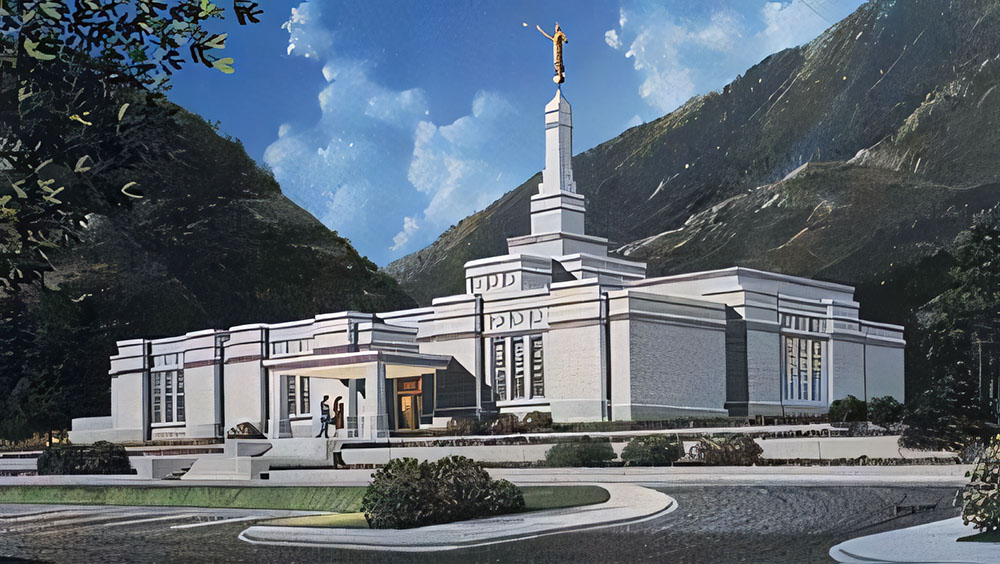
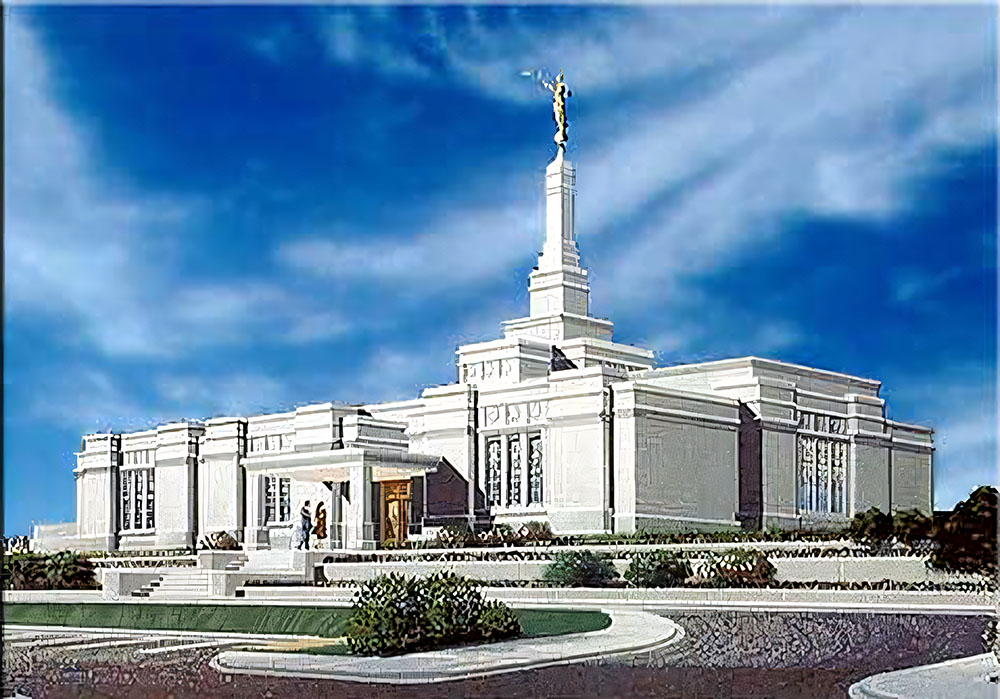
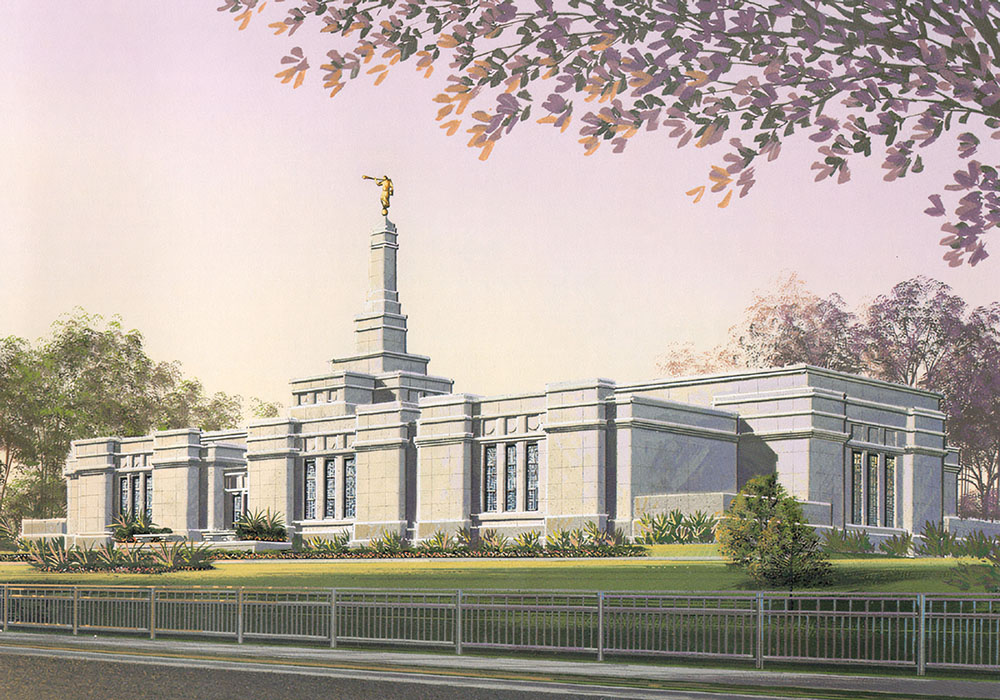
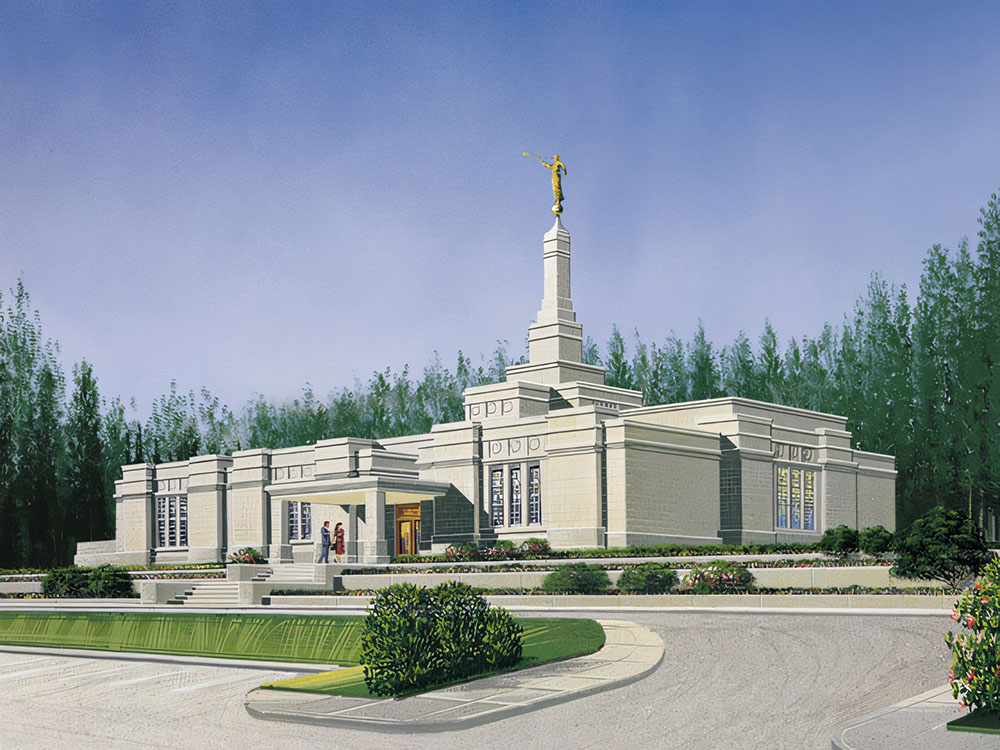
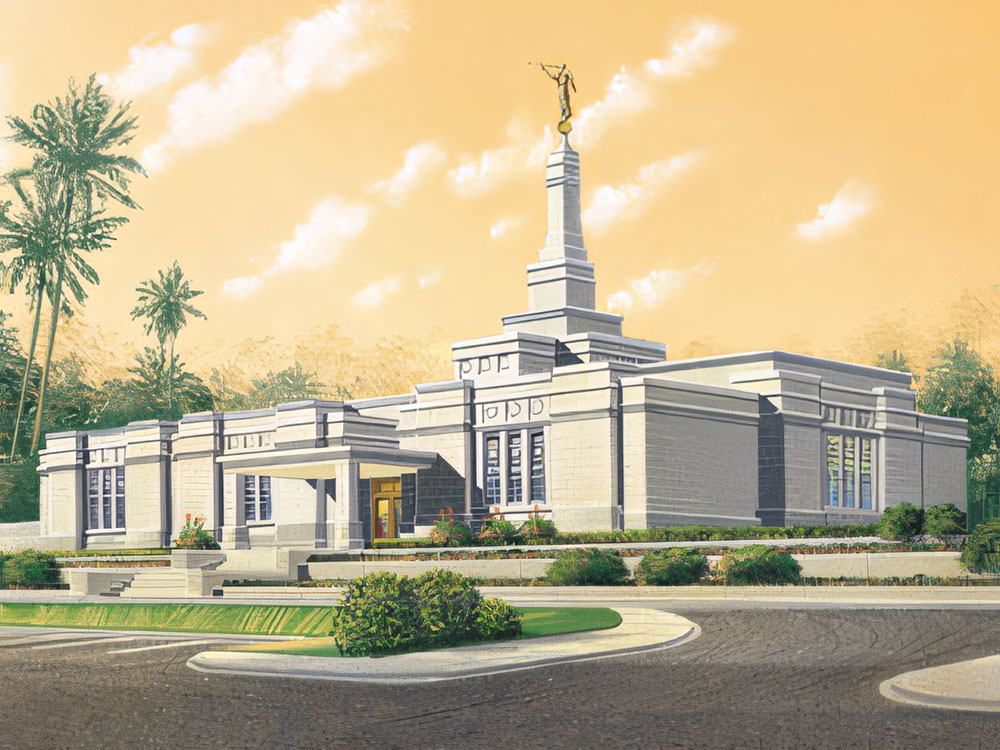
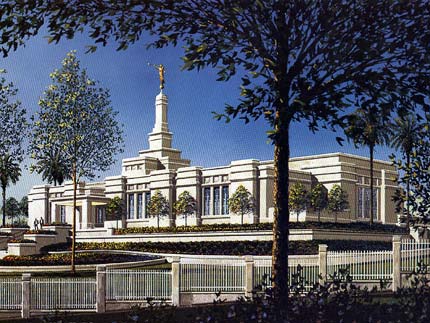
Official Renders
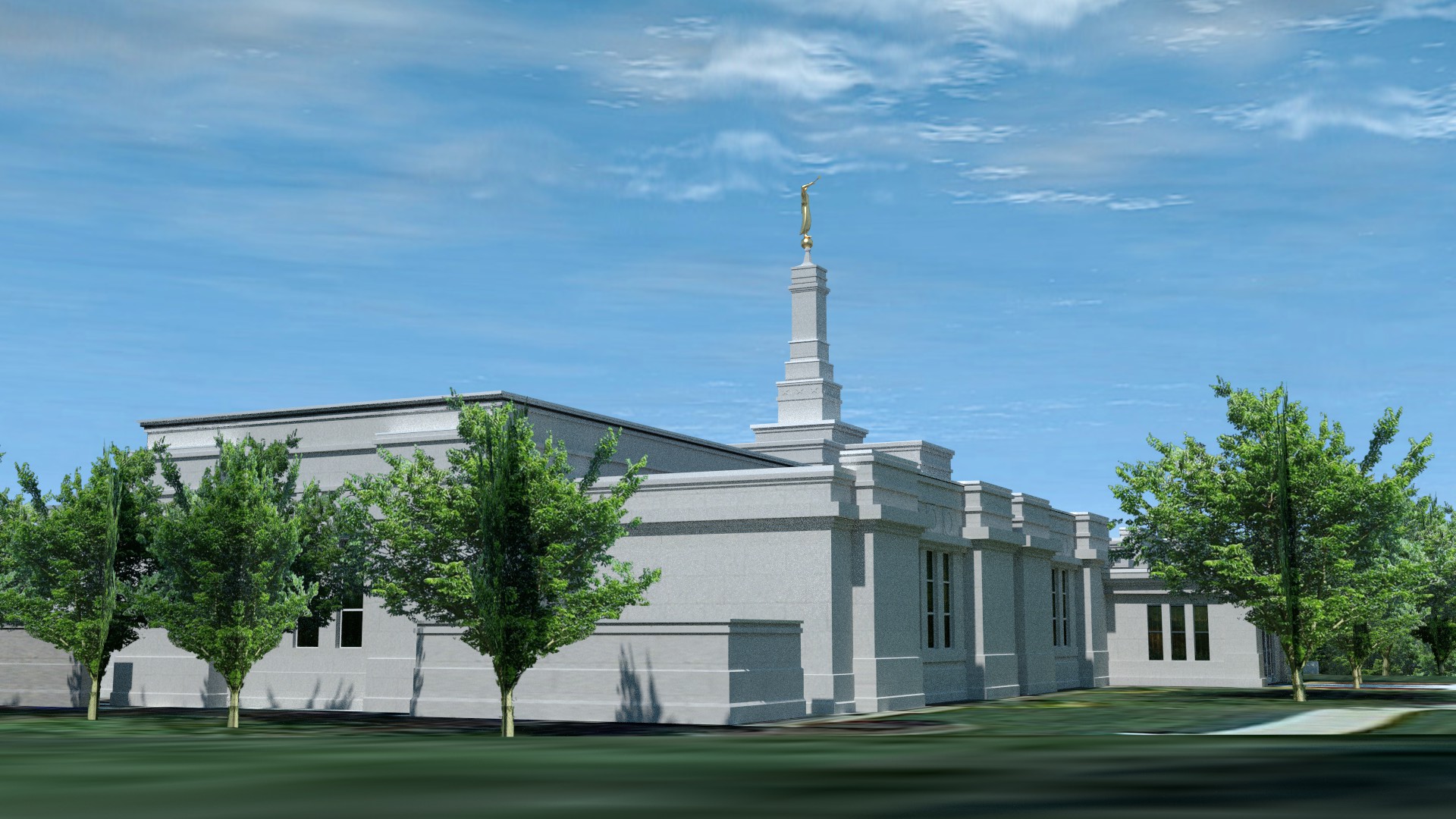
Each of these images were found on websites providing information on various small temples when they were being constructed. They may or not be official renders provided by the Church.
Variations
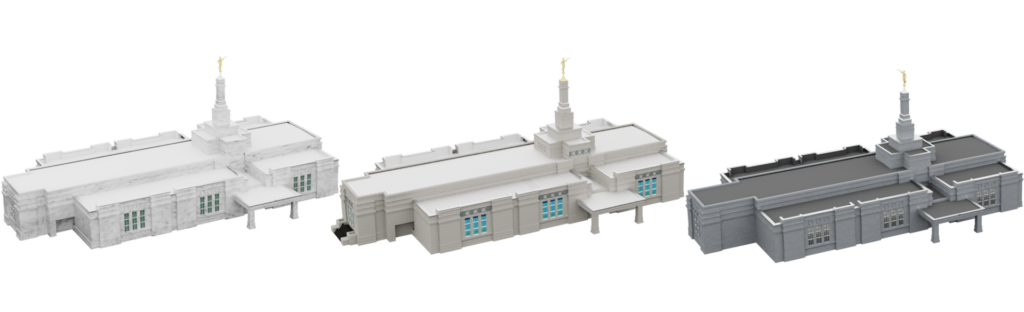
Extended Celestial
Three of these temple models were built with an extended celestial room. Louisville, Brisbane (with a waterfall coming out from under the Celestial Room windows), and Fresno California.
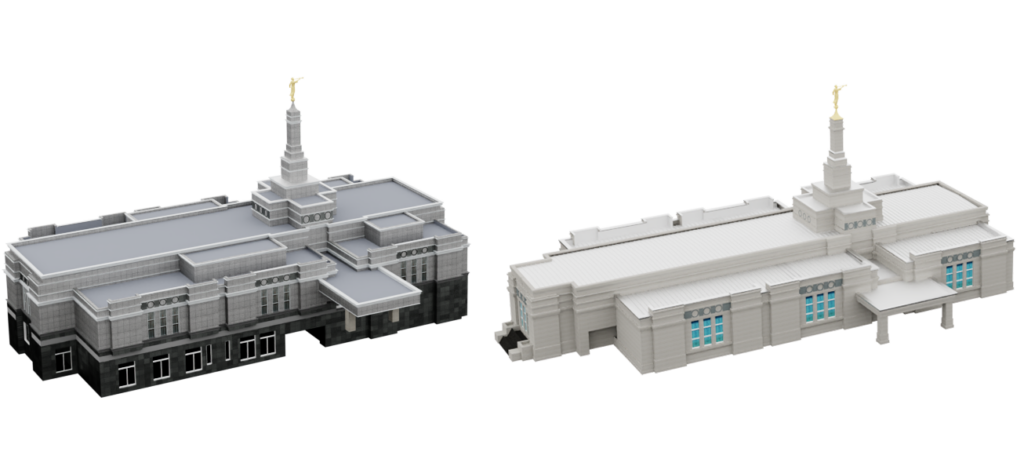
Basements
Three of the temples using this floor plan were given a modification to the structure to include a full basement. In the case of the Hauge Netherlands (only temple of this floor plan to have a completely unique exterior), and Brisbane Australia, this was to accommodate a parking structure directly under the temple.
In the Case of Fukuoka Japan, this was to make room for the mission office (under the baptistry) and the mission home (under the rest of the temple.)
Left-hand Entrance
In all cases but three, when standing at the temple entrance, the baptistry is to the right, and the rest of the temple is to the left. The three exceptions to this, The Hague, Regina Saskatchewan, and Oklahoma City Oklahoma, have the baptistry on the left hand, with the majority of the temple to the right of the entrance. The floor plan being mirrored from the majority.
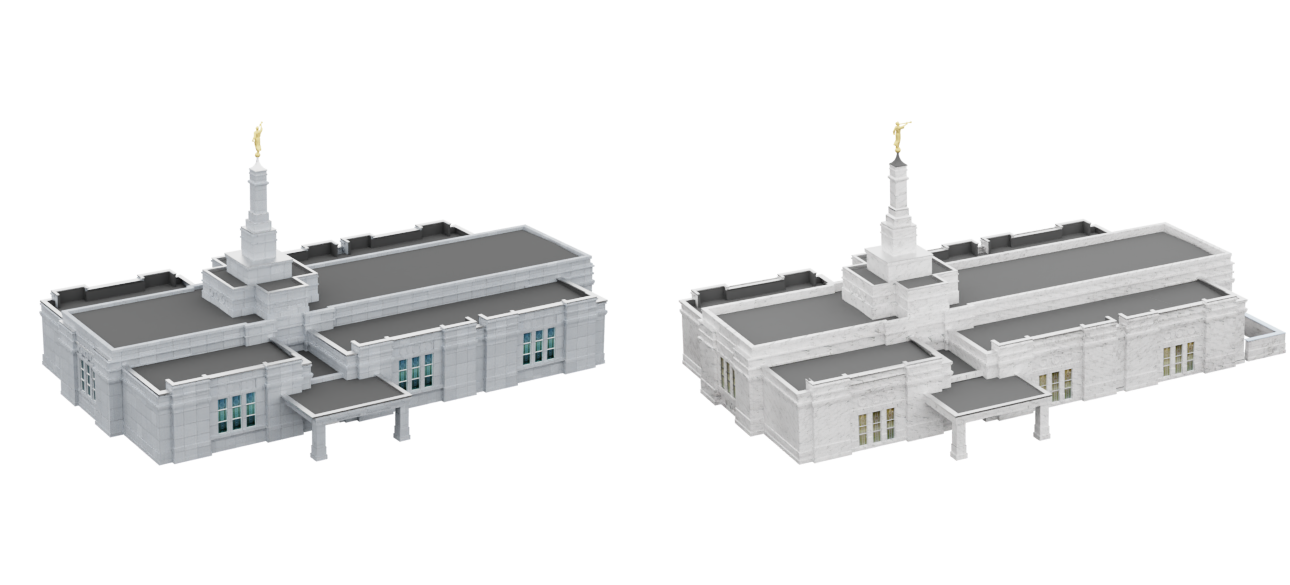
Window Heights
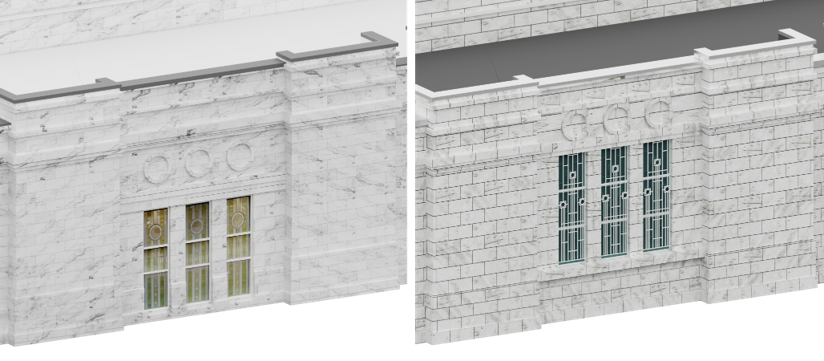
One of the more common variations to this temple floorplan was the placement of the windows. Some of the small temples in the United States were given windows that were at the ground floor level. The advantage of these windows is that tall three panes of each window were available to allow in light. This is contrasted with the more common high set windows, in which for most of the temple, only the bottom pane were funtional windows, with the upper windows being backlit and in the mechanical spaces of the temple.
Expansion and Renovation
References
| ↑1 | Kona would be completed and dedicated before roughly half of those. |
|---|---|
| ↑2 | Hinckley, Gordon Bitner, 1910-2008. Small temple drawings, 1997-1998 , https://catalog.churchofjesuschrist.org/assets/ba761252-d126-47a1-a355-d19c0ed7a085/0/0 (accessed: February 1, 2025) See catalog description for details |
Last updated on: 19 April 2026